📝 VIDEO SUMMARY
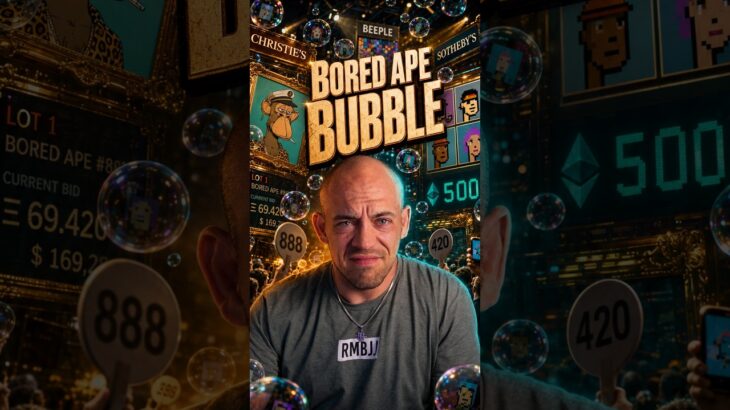
On a March morning in 2021, Christie’s sold a Beeple collage for $60.25 million, about $69 million once the buyer’s premium landed, and the crypto world declared a new era for art. What actually sold was a token pointing at a file on a rented server. This episode of History of Bitcoin reads the contract instead of the headline, from Beeple to the CryptoPunks to the Bored Apes, and finds the oldest bubble mechanics on earth wearing a monkey JPEG.
⏳ CHAPTERS
0:00 🔥 $69 million at Christie’s: the Beeple hammer drops
0:25 🧠 What an ERC-721 token actually is
0:46 🔍 The JPEG lives on a server that can disappear
1:00 ⚡ You bought a receipt, not the art
1:22 💰 MetaKovan revealed and the CryptoPunks floodgates
🥩 THE MEAT
Mechanically, here is the whole purchase: an ERC-721 token is a line in a smart contract saying that a particular address controls a particular serial number. The serial number points at a file that almost always lives somewhere else entirely, on an AWS server or a Hetzner server, where it can be deleted. It can just disappear. So the token is a receipt and the art is a link: people were not buying art in 2021, they were buying receipts for art, IOUs living on the Ethereum network. A week after the sale, the pseudonymous buyer MetaKovan was revealed as Vignesh Sundaresan, and the floodgates opened: Christie’s moved nine CryptoPunks as one lot for over $16 million, and Sotheby’s sold a single alien punk in June for over $11 million to the largest shareholder of DraftKings. Sports betting money buying a pixelated alien. 💰
Why does the distinction matter to you? Because provenance is only as strong as the place the data lives: a file in a private database is trivial to alter, and a token pointing at that file inherits every weakness of its host. Sound money and real digital property come down to the same boring question of where the record sits and who can touch it, which is exactly the question a public ledger was designed to answer. In the clip I say this distinction “is going to matter enormously in a later installment.” The payoff is coming. ⚡
🎯 THE DIVERGENT FACTOR
CNBC and Bloomberg covered the prices, because prices make great television: $69 million! Eleven million for an alien! The spectacle was the story, and the spectacle asked nothing of anybody. Reading the mechanism is less fun and more useful: once you see that the product was a receipt pointing off-chain, 2021 stops looking like an art revolution and starts looking like the South Sea Company in 1711, a performing asset that fooled even Isaac Newton. Just because something is “performing” does not make it valuable. The chart went up. The contract never changed.
━━━━━━━━━━━━━━━━━━━━━━━━━━
🎙️ JOIN THE LIVE AMA: Every Tuesday at 2 PM EST for the unscripted truth.
🔔 SUBSCRIBE: To join the tribe of sovereign thinkers finding the signal in the noise.
🌐 THE RESEARCH: Read the full piece with primary source citations at kurtwuckertjr.com
━━━━━━━━━━━━━━━━━━━━━━━━━━
#️⃣ HASHTAG STACK
⛏️ #Bitcoin #BSV #Crypto #Blockchain
🔍 #NFT #BoredApeYachtClub #Beeple #CryptoPunks #NFTBubble
🎙️ #KurtWuckertJr #GorillaPodcast #InvisiblePlantation
📈 #WhatIsAnNFT #NFTHistory #HistoryOfBitcoin